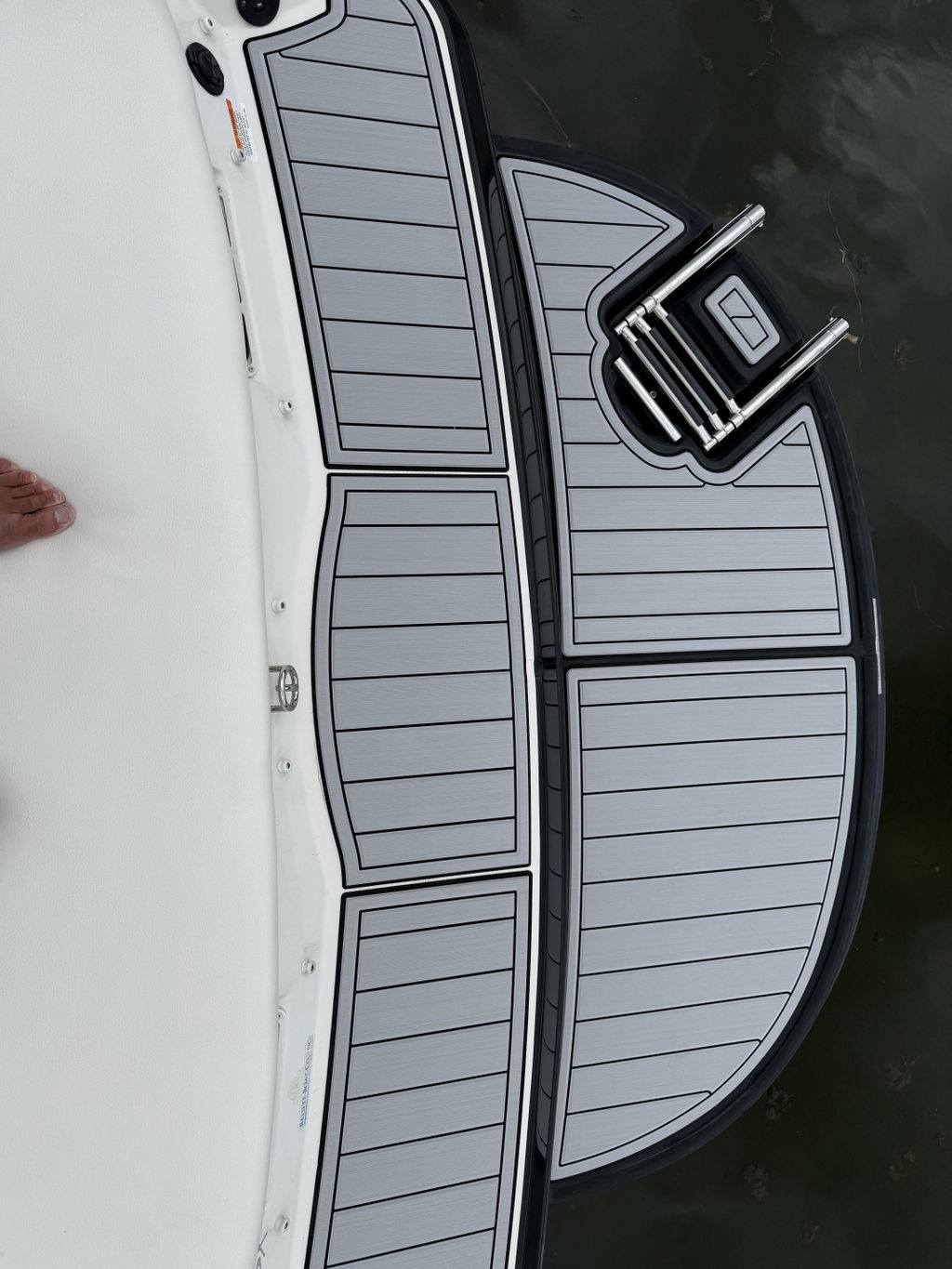



What Glue to Use in What Situation?
In the field of EVA foam marine flooring, the choice of adhesive is crucial, as it must withstand the harsh marine environment, including continuous exposure to water, UV radiation, temperature fluctuations, and mechanical stress.
1. Primary Bonding: Panel Splicing and Flooring Installation
This is the most critical application, creating a permanent, waterproof bond between EVA panels or between EVA and the ship's deck.
Adhesive: Polyurethane Contact Adhesive
Use Case:
Splicing: Bonding the edges of individual EVA foam panels together to create a seamless, continuous flooring surface.
Full Installation: Permanently bonds large EVA flooring panels to boat decks (typically fiberglass, aluminum, or painted wood).


2. Surface Lamination and Minor Repairs
Adhesive: Specialty EVA Adhesive/Water-Based PU Adhesive
Use Case:
Bonding the top decorative layer or non-surface layer to the E-foam substrate during manufacturing or on-site repairs.
Small, localized repairs on pre-installed flooring.
3. Sealing and Edge Work
Adhesive: Polyurethane Sealant or MS Polymer Sealant
Use Case:
Sealing Perimeter: Filling the gap between the edge of the EVA flooring and the boat's gunwales, hatches, or other fixtures to create a watertight seal and prevent debris from getting underneath.
Seam Reinforcement: Adds waterproof beads to critical seams for enhanced safety
Reasons to Use:
Highly Resilient: Can stretch and compress during vessel movement without cracking.
Excellent Weather/UV Resistance: Withstands harsh marine environments without breaking.
Adhesion: Provides strong bonds to EVA, fiberglass, and metal.
The Key Role of Primer
Product: Plastic and Elastomer Primer (e.g., 3M Primer 94)
Use Case:
Apply to boat deck surfaces before installing EVA foam flooring.
Why Essential:
Dramatically Enhances Adhesion: Creates a strong secondary bond, ensuring maximum performance of the primary adhesive.
Additional Resources:
Share